The Rise and Fall of Harvard President Claudine Gay
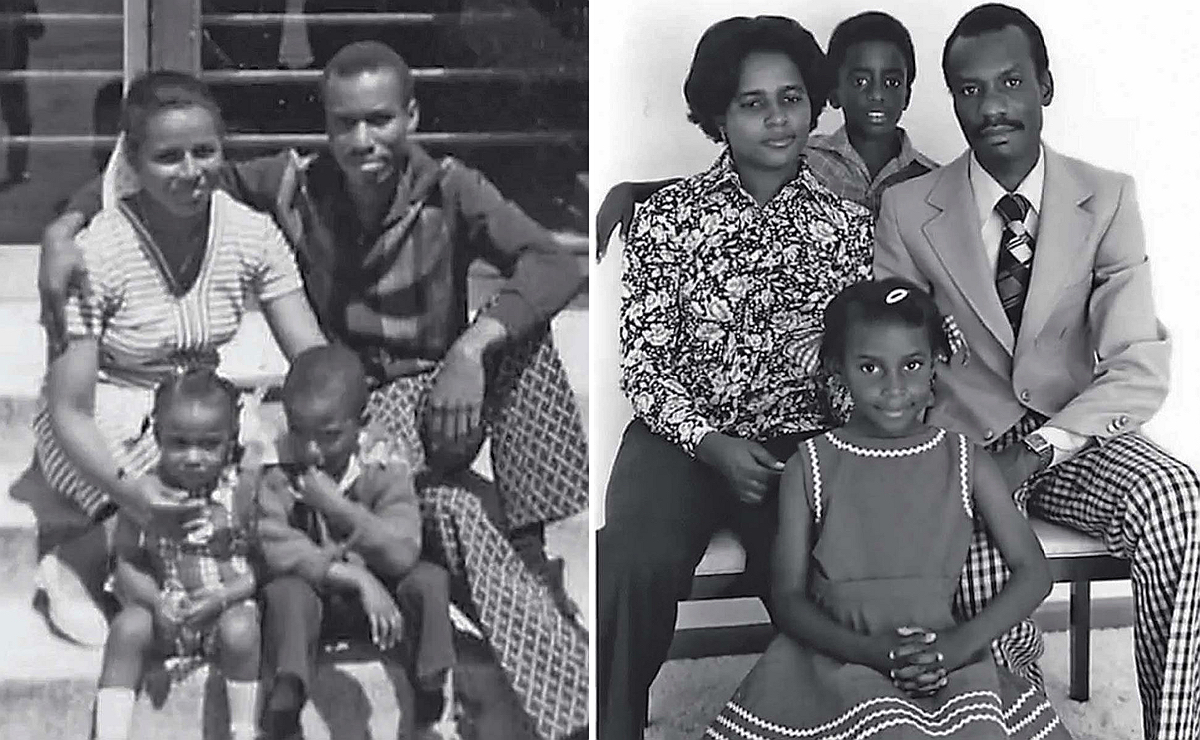
Below article by Emma H. Haidar and Cam E. Kettles, The Harvard Crimson; image from; see also Claudine Gay: "What Just Happened at Harvard Is Bigger Than Me," The New York Times, Jan 3; see also "Plagiarism charges downed Harvard’s president. A conservative attack helped to fan the outrage," by Collin Binkley and Moriah Balingit, AP, Updated 7:34 PM EST, January 3, 2024; and/and also ...

“We are confident Claudine will be a thoughtful, principled, and inspiring president for all of Harvard, dedicated to helping each of our individual schools thrive, as well as fostering creative connections among them,” Harvard Corporation Senior Fellow Penny S. Pritzker ’81 wrote in a December 2022 email announcing Gay’s appointment.
While Gay faced a looming Supreme Court decision on affirmative action and the task of spearheading fundraising post-Covid 19, her selection as president was widely considered a sign of positive change in the coming years.
Israel-Palestine Backlash
When Gay assumed the presidency on July 1, she was tasked with maintaining Harvard’s commitment to diversity after a Supreme Court’s ruling effectively ended the use of race-conscious admissions practices.
“Our commitment to that work remains steadfast, is essential to who we are, and the mission that we are here to advance,” Gay said in a video message following the decision.
Rethinking Harvard’s admissions practices was Gay’s first major challenge as president. But the landmark Supreme Court ruling against Harvard would later pale in comparison to crises Gay would face just months later.
On Oct. 7, Hamas — which the U.S. designates a terrorist organization — launched an attack on Israel, killing an estimated 1,200 people. Israel responded by declaring war on Hamas, and has since killed more than 20,000 people in Gaza.
In the days following the attack, eyes turned toward Harvard when more than 30 student groups signed onto a statement from the Harvard Undergraduate Palestine Solidarity Committee holding Israel “entirely responsible” for the violence that occurred on Oct. 7.
Harvard’s first official statement, two days after Hamas’ initial attack, was widely criticized as being too ambiguous and too slow. Gay’s administration never fully recovered from the backlash to its initial statement.
Garber, who became interim president upon Gay’s resignation on Tuesday, acknowledged that the first statement did not go far enough in an interview with The Crimson on Nov. 9.
In a slew of subsequent statements, Gay took a more definitive stance against Hamas and the student groups’ statement, but also alienated multiple student groups and professors by condemning the phrase “from the river to the sea” as campus tensions continued to rise.
Then, Gay appeared before the House Committee on Education and the Workforce on Dec. 5 for a hearing about antisemitism on college campuses, in what has now become known as one of the most damaging congressional testimonies in years.

In response to a line of questioning from Rep. Elise M. Stefanik ’06 (R-N.Y.), Gay said that calls for genocide of Jewish people would not automatically be in violation of Harvard’s code of conduct, instead insisting that it depended on the context.
Her response, for which she later apologized, went viral just hours after the hearing, and amplified calls for Gay’s resignation. Less than a month later, just one of the three presidents who testified at the hearing — MIT President Sally A. Kornbluth — remains in her position.
The Crimson also reported that the Corporation’s former Senior Fellow William F. Lee ’72 played an outsized role in Gay’s testimony preparation alongside other lawyers from WilmerHale, a law firm where Lee is a partner. WilmerHale’s involvement in preparing Gay for her testimony sidelined external public relations and communications experts.
After the testimony, the House of Representatives passed a resolution calling for Gay’s resignation and the House Committee on Education and the Workforce launched an investigation into both the administration's response to antisemitism and later, allegations of plagiarism against Gay.
After staying silent for a week, the Corporation, Harvard’s top governing body, released a statement of unanimous support for Gay, following what they said was “extensive deliberation.” Gay’s position was temporarily secured.
Allegations of Plagiarism
But it was allegations of plagiarism which emerged following Gay’s congressional testimony that may have dealt the final blow to her presidency.
Before the allegations were made public, the University attempted to prevent the New York Post from publishing an article about the charges of plagiarism, days before opening their own investigation into the claims.
That investigation later concluded that Gay’s scholarship contained multiple instances where quotation marks or authors’ names needed to be added.
While the allegations themselves ranged from no more than three repeated words to numerous repeated lines without attribution, the conservative activists at their root made close to 50 plagiarism allegations in total.
Christopher F. Rufo, a right-wing activist known for popularizing — and demonizing — the phrase “Critical Race Theory,” was one of the first to publish the allegations online, claiming in a Substack post with journalist Christopher Brunet that Gay had plagiarized portions of her dissertation on Dec. 10. Rufo wrote in a post on X that the announcement, which came as the Corporation met to deliberate on Gay’s fate, was timed so it would do the most damage to Gay and her presidency.
Additional allegations of plagiarism followed soon after in reports from the Washington Free Beacon and the New York Post, calling into question articles from across Gay’s academic career.
After Tuesday’s announcement, Rufo wrote on X that he would next attempt to “abolish the DEI bureaucracy, expand viewpoint diversity on the faculty, adopt the Kalven principle, restore colorblind equality,” referencing the 1967 University of Chicago “Kalven report” which recommends institutional neutrality.
Both Gay and the Corporation addressed the effect race had on Gay’s treatment in their statements Tuesday. Gay wrote that she has been “subjected to personal attacks and threats fueled by racial animus” and the Corporation added that she had privately been the subject of “repugnant and in some cases racist vitriol directed at her through disgraceful emails and phone calls.”
Numerous public figures have since questioned if the level of scrutiny on Gay’s scholarly work would have been as intense if she were not a Black woman in the University’s most prestigious and high profile position.
In an X post following Gay’s resignation, author Ibram X. Kendi wrote that the backlash against Gay was fueled by racism and criticized media outlets for platforming such claims.
“The question is whether all these people would have investigated, surveilled, harassed, written about, and attacked her in the same way if the Harvard president in this case would have been White,” he wrote.
“I. Think. Not,” Kendi added.
NAACP Legal Defense and Educational Fund President Janai Nelson also wrote on X that Gay’s resignation sets a “dangerous precedent” for higher education.
“Attacks against Claudine Gay have been unrelenting & the biases unmasked,” Nelson wrote. “This protects no one,” she added.
Gay served as Harvard president for 185 days.
—Staff writer Emma H. Haidar can be reached at emma.haidar@thecrimson.com. Follow her on X @HaidarEmma.
—Staff writer Cam E. Kettles can be reached at cam.kettles@thecrimson.com. Follow her on X @cam_kettles or on Threads @camkettles.
***
From Wikipedia:
"Gay attended Phillips Exeter Academy, a private boarding school in Exeter, New Hampshire,[20] graduating in 1988.[21] She attended Princeton University for one year[21][22][23] before transferring to Stanford University, where she studied economics, graduating in 1992. She received the Anna Laura Myers Prize for the best undergraduate thesis in economics.[19] Gay earned her Ph.D. in 1998 from Harvard, where she won the university's Toppan Prize for the best dissertation in political science.[24]"
***
Overheard in DC: "Gay had a French upbringing, no wonder she made it as an immigrant to the US of A."


Comments
Post a Comment